Reading notes
AI notesOverview
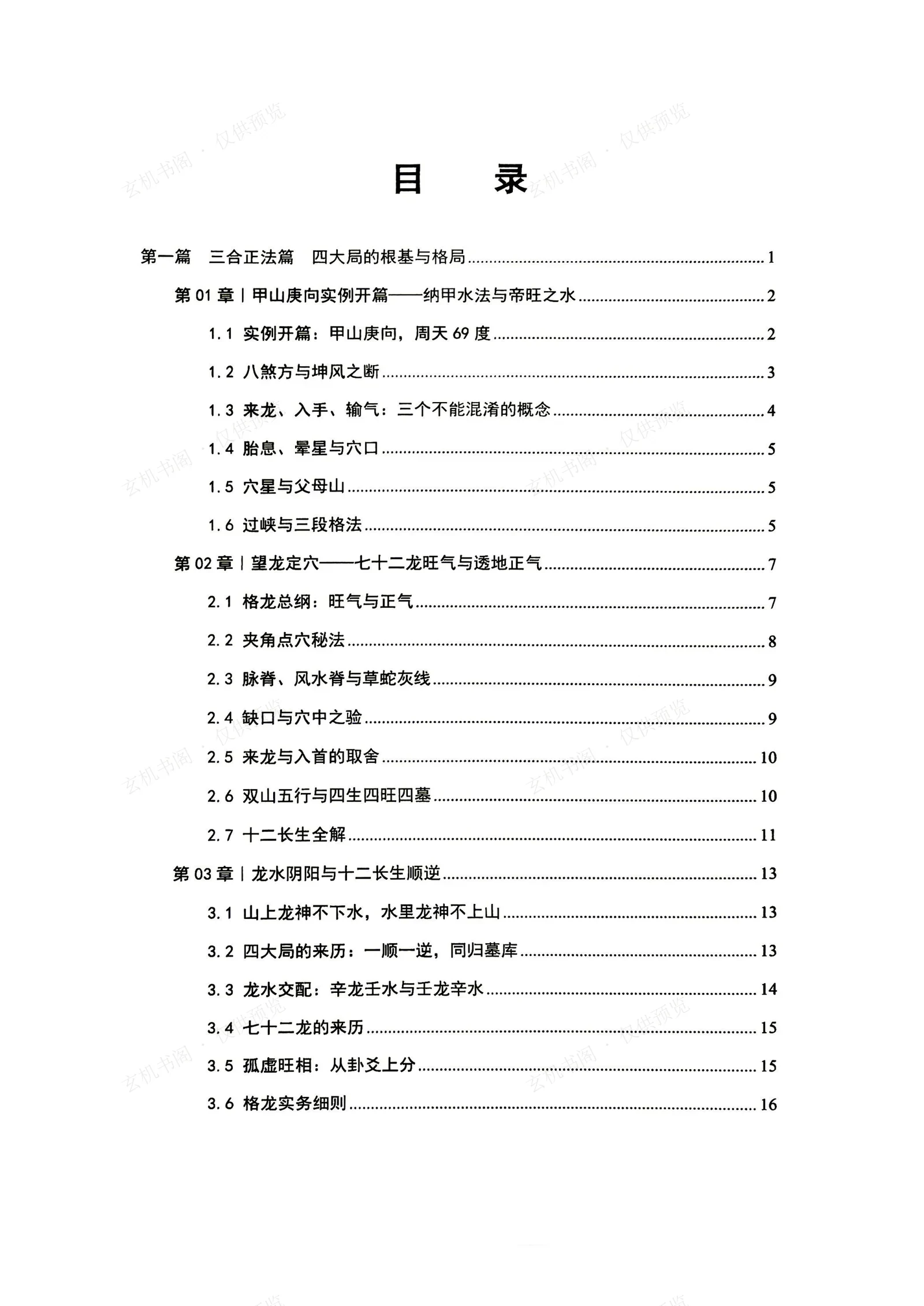
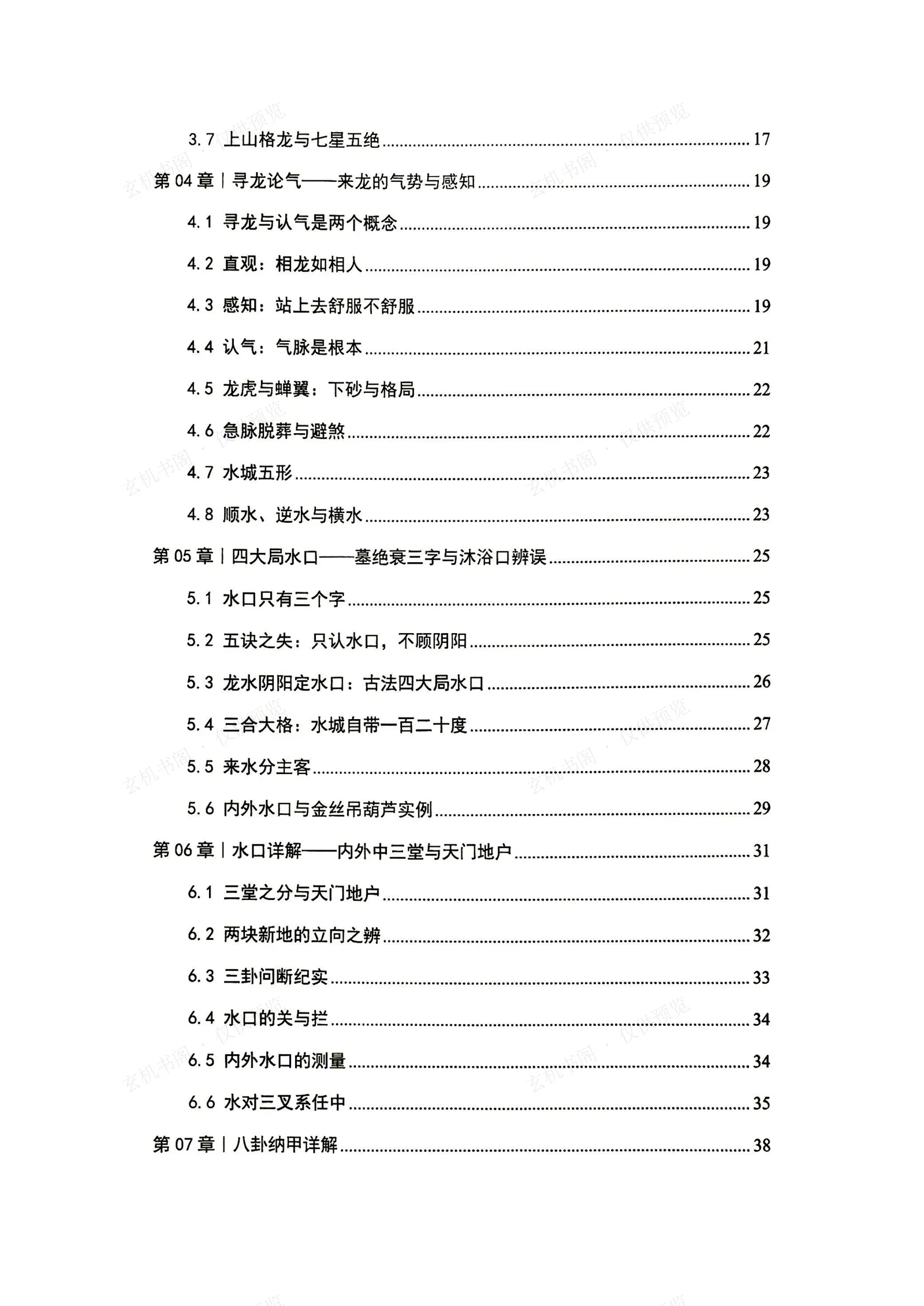
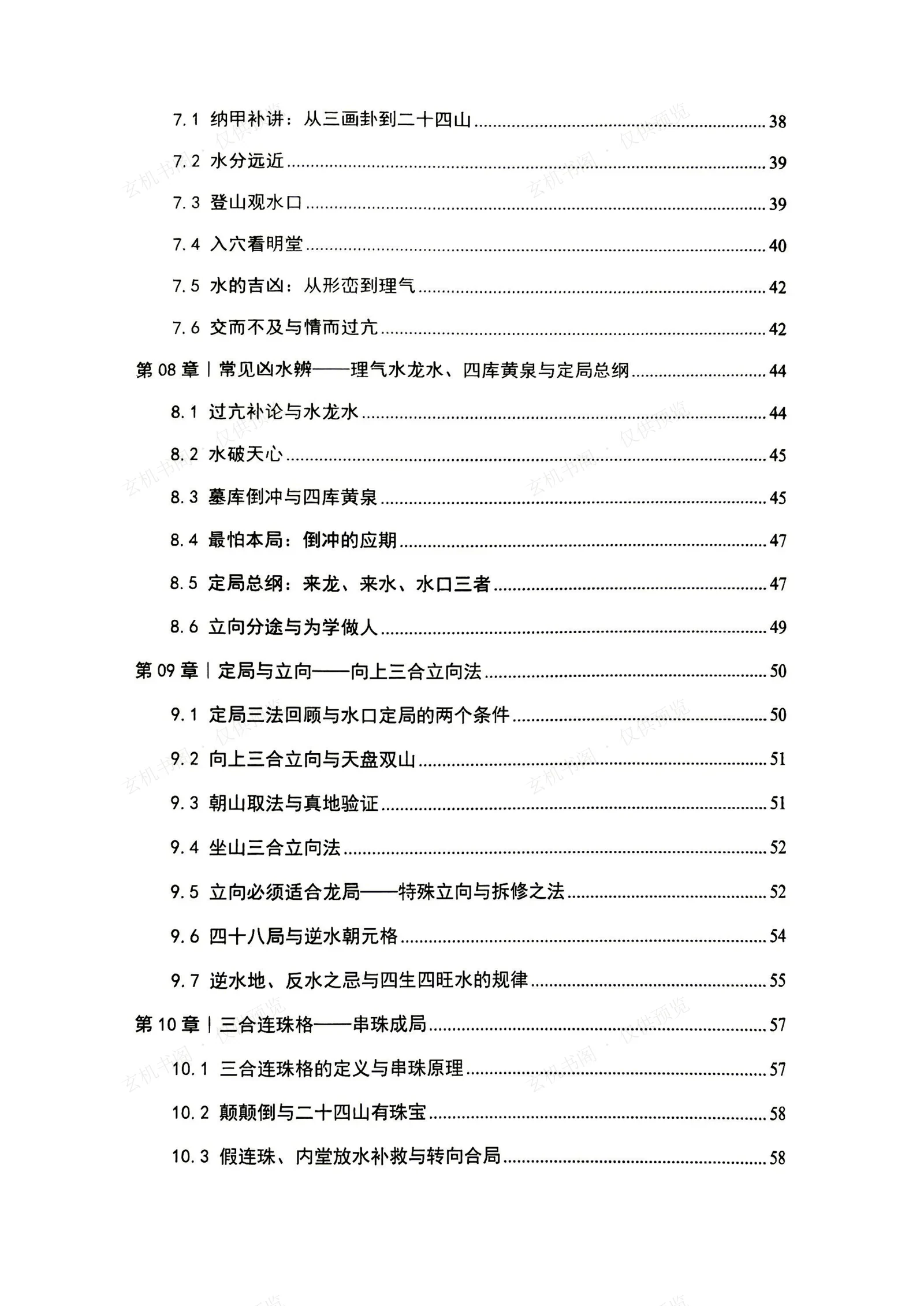
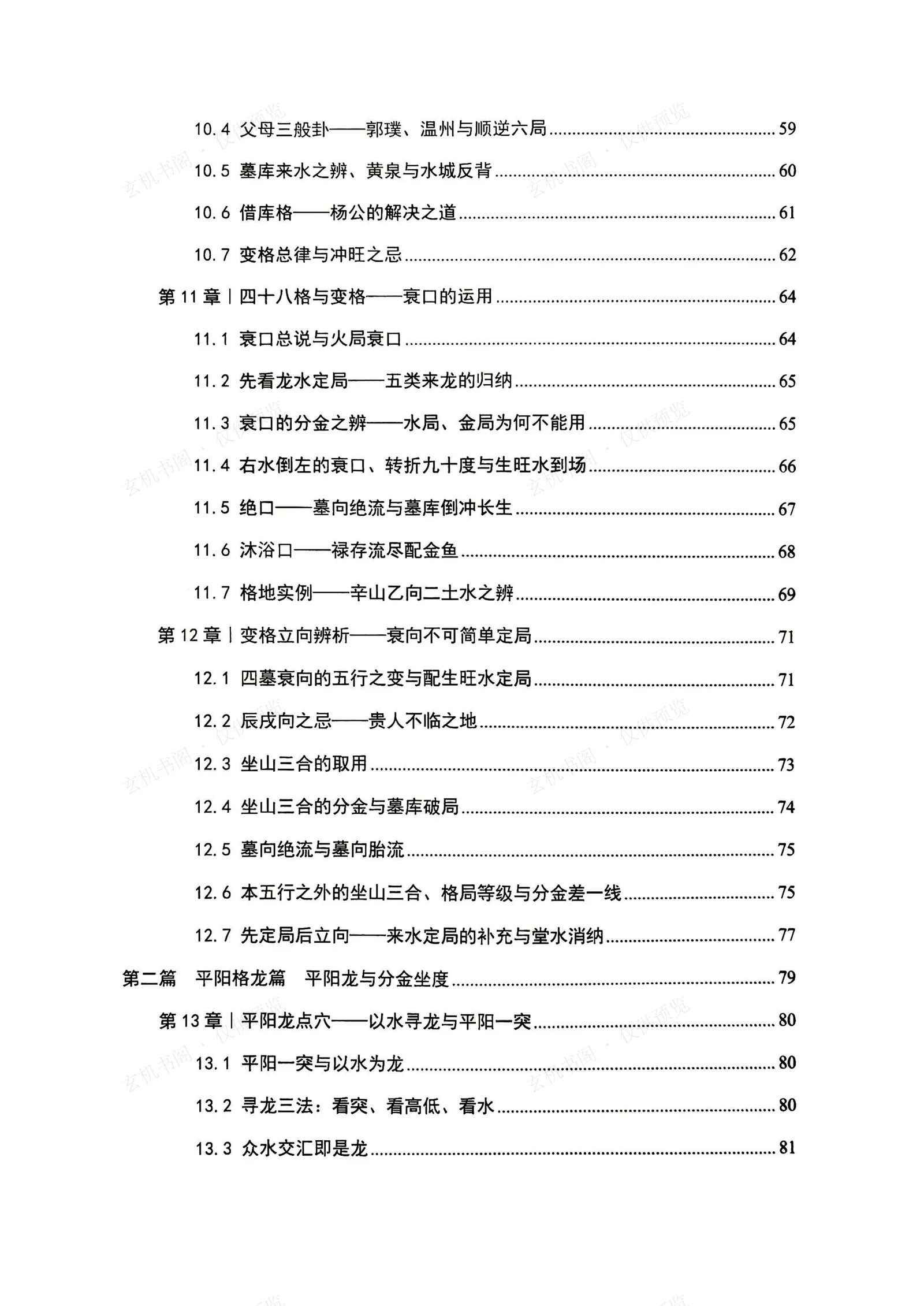
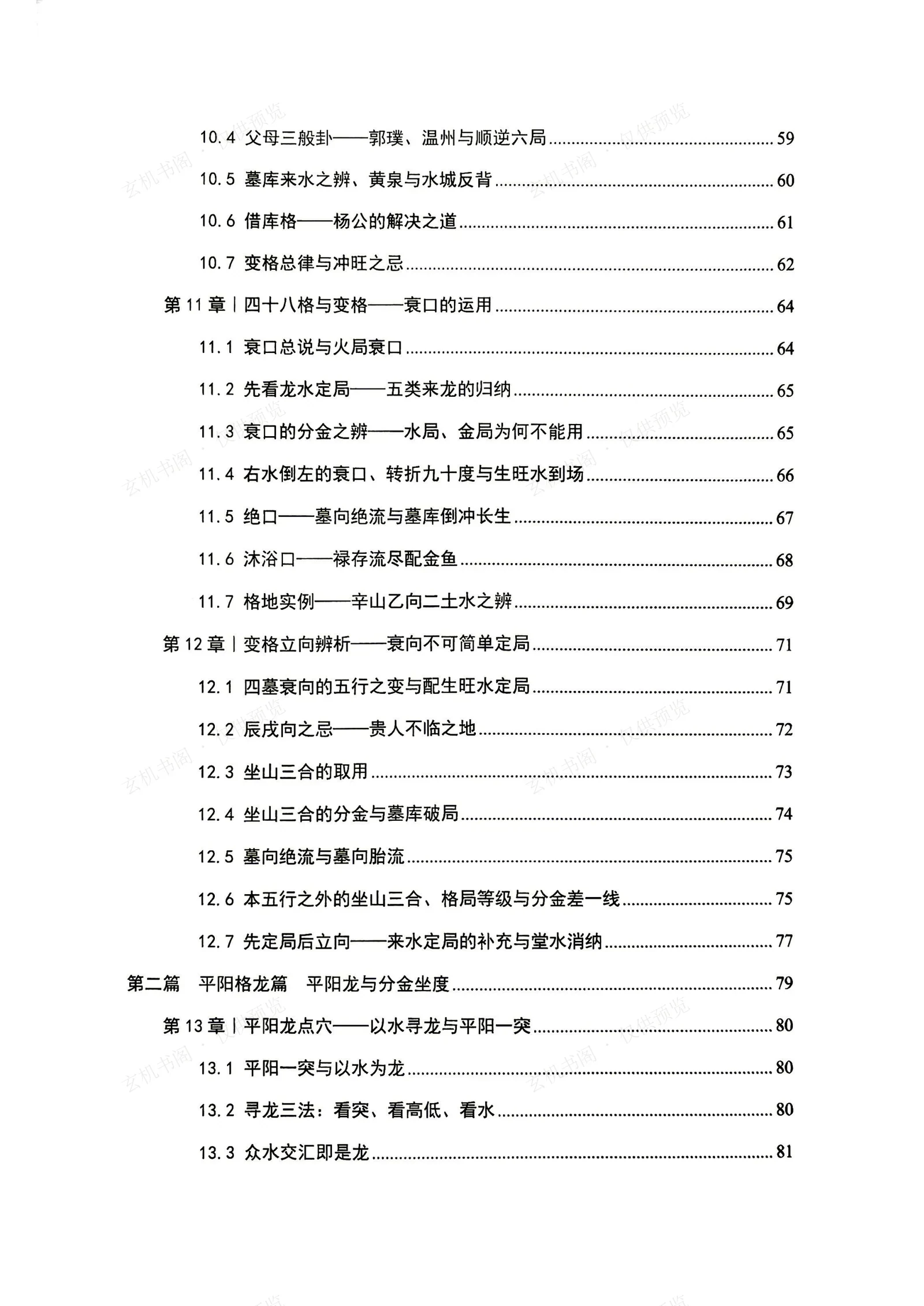
This book, titled True Interpretation of Ancient Sanhe Feng Shui with the subtitle 'Detailed Explanation of Yang Gong Sanliao Sanhe Feng Shui in Forty-Eight Lectures,' is organized as a structured lecture series. Part One, the Sanhe Orthodox Method, begins with the Jia-mountain-Geng-facing example and explains the Four Great Bureaus,纳甲 water methods, and the concepts of incoming dragon, entrance, and qi transmission. It covers fetal breath, halo stars, acupoint mouth, parent mountain, gorge passage, and three-section pattern methods, then moves to dragon observation, seventy-two dragon qi, point selection by angle, ridge lines, gap tests, double-mountain five phases, the twelve growth phases, yin-yang of dragon and water, dragon-water pairing, and practical rules for dragon formation. Later chapters discuss qi perception, water city five forms, the four bureau water mouths, the three characters of tomb, cutoff and decline, bathing mouth errors, inner and outer water mouths, the golden-thread gourd example, three halls and the heavenly gate and earthly door, eight trigram na-jia, common inauspicious water patterns, bureau setting and facing, connected pearl patterns, forty-eight patterns and variant patterns, and facing analysis for variant patterns. Part Two covers flatland dragon formation and degree subdivision. The book is dense in terminology and suited to readers with basic Sanhe knowledge who want a systematic treatment of Yang Gong classical method.
Contents
Part One: Sanhe Orthodox Method—foundations and patterns of the Four Great Bureaus
Chapters 1–3: Jia-Geng example, dragon observation and point setting, twelve growth phases and dragon-water yin-yang
Chapters 4–6: seeking dragons and qi, four bureau water mouths, inner and outer halls
Chapters 7–9: eight trigram na-jia, common inauspicious water, bureau setting and facing
Chapters 10–12: connected pearl pattern, forty-eight patterns and variants, variant facing analysis
Part Two: Flatland Dragon Chapter—flatland dragons and degree subdivision (from Chapter 13)
Key Points
Presents Yang Gong Sanliao Sanhe method in a lecture format
Focuses on the Four Great Bureaus, dragon formation, water mouth, and facing as an integrated system
Clarifies easily confused concepts such as incoming dragon, entrance, and qi transmission
Dedicated chapters on decline mouth, bathing mouth, and tomb-cutoff variants
Includes flatland dragon methods and degree subdivision